
Start an Oroville Residents Directory Search
People connected to Oroville appear in several record systems, each built for a different task. The Butte County Assessor starts with a street address or APN, the parcel number assigned to land. The Clerk-Recorder adds deeds and other recorded instruments. The Superior Court index adds party names and case events. Historical names come from the Butte County Library, CSU Chico's digitized Butte directories, newspapers, and census schedules. A city-created record belongs with the Oroville City Clerk or the department that made it, even when the mailing address says Oroville.
The result is useful but never complete. A parcel result connects a property to a location and tax facts, not every person who lives there. A deed names parties to a transaction, not an entire household. A voter status page authenticates one voter and is not a public name list. A directory entry records a person at a printed date and may show an occupation or spouse without proving a present address. Keep those limits in view while following the trail.
- Start with the known clue. Search the Butte County Parcel Search / Assessed Value Lookup by street address or APN when the trail begins at land.
- Save the parcel's APN, situs address, abbreviated legal description, and status. “Situs” means the physical location shown for the parcel, not a residence claim.
- Use the APN and legal description in the Butte County Clerk-Recorder Self-Service index, then obtain the underlying document when the record matters.
- For one person, compare the court index, license or business record, obituary, or eligible vital record while preserving spelling, dates, and locality.
- Move backward through the library's directories and census sources for family history, then ask the creating custodian for a narrow record that is not online.
Note: An official record can anchor a name, place, or event without proving a complete current household.
The Offices Behind Oroville Records
Oroville is the Butte County seat, so several public counters sit close to the records trail, but their duties stay separate. The Clerk-Recorder at 155 Nelson Avenue examines, images, indexes, and archives recorded instruments and maps. The Assessor at 25 County Center Drive handles secured-roll values, parcel maps, and legal descriptions. Elections operates the voter-status and voter-file channels. The Superior Court at One Court Street keeps the case index and court files. A city-created file instead starts with City Hall at 1735 Montgomery Street.
Use the office that created the record. The Butte County Clerk-Recorder is the right starting point for deeds, liens, maps, marriages, fictitious business names, and other registrations. The Butte County Assessor is the parcel bridge. The California Secretary of State's My Voter Status portal is a self-check, while broader voter-file access requires a qualified purpose under California Elections Code §2194.
Butte County Clerk-Recorder
155 Nelson Avenue
Oroville, CA 95965
530-552-3400
Butte County Assessor
25 County Center Drive
Oroville, CA
530-552-3800
Butte County Elections
Clerk-Recorder / Registrar channel
Oroville, CA
County contact varies by request
Oroville Parcel Search Before a Deed
The Butte County Parcel Search accepts either an Assessor Parcel Number or a street address. An APN is the tax map key, not a street name. The public result describes the APN, property status, situs address, abbreviated legal description, land value, improvement value, exemption amount, and total assessed value. Vacant land may have no street address, so an APN can be the stronger first clue.
The county's search is not documented as an unrestricted owner-name directory. Read the parcel as a location bridge. Save its APN and legal description, then use the recorded index to test who signed a deed or other instrument tied to that land. The Butte County Data Search and Public Works viewers add jurisdiction, zoning, flood, permit, code, and land-use context, but parcel polygons are tax-map representations rather than survey-grade boundaries.
| Assessor field | What it contributes |
|---|---|
| APN | Book-Page-Parcel key, such as 036-011-015. |
| Situs Address | Physical parcel location shown by the assessor. |
| Legal Description | Short land description to compare with a recorded instrument. |
| Values and Exemption | Tax-roll context, not proof of occupancy. |
The Assessor office is the counter fallback when a parcel result needs clarification. Its published contact is 530-552-3800 at 25 County Center Drive. Keep the exact labels from the result; “situs” and mailing address answer different questions.
The manifest's Assessor source capture shows the public parcel-search entrance and its APN/address path:
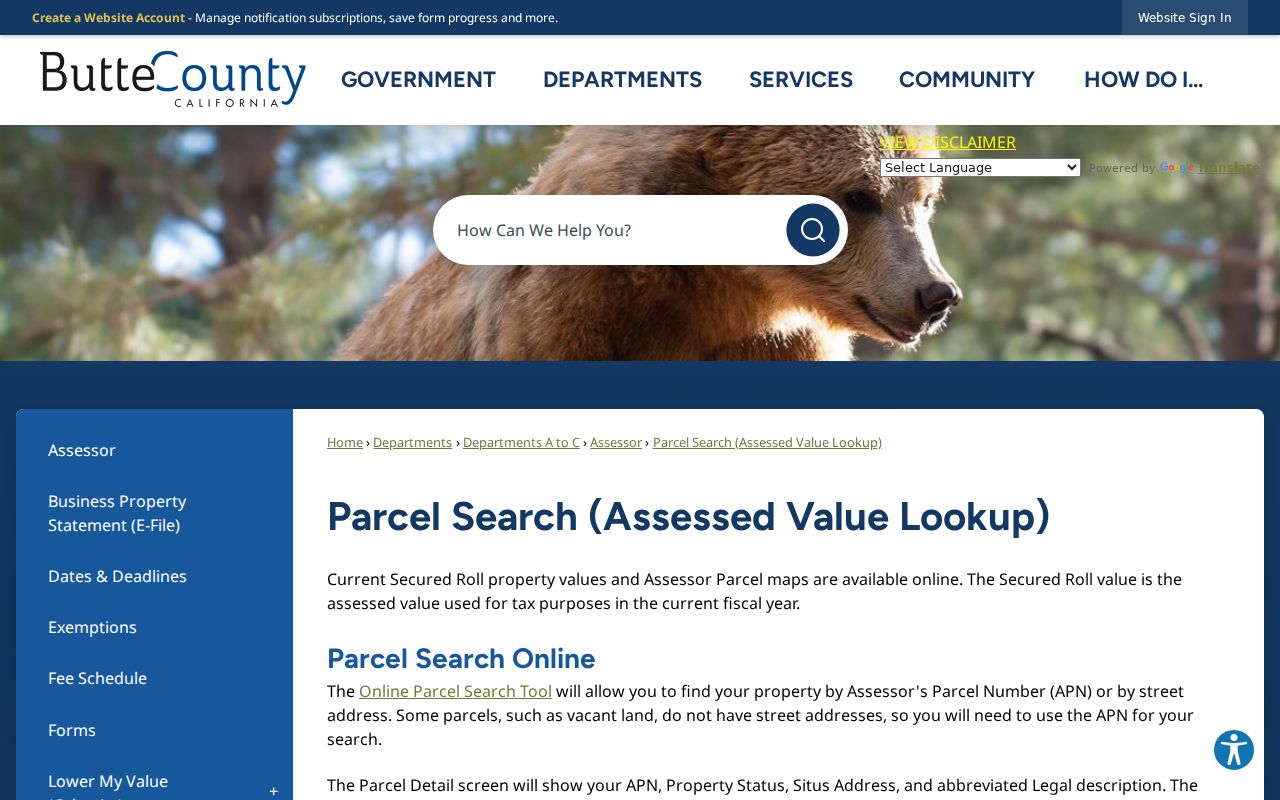
That parcel view belongs at the start of an Oroville residents directory trail because it gives later deed, map, and permit searches a shared land key.
- Parcel
- A mapped unit of land identified by the assessor's APN.
- Situs
- The physical location assigned to the parcel, not a claim about who lives there.
- Index
- A finding aid that points to a record; it is not the full document.
- Criss-cross directory
- A historical directory arranged by street and house number rather than only by surname.
The Oroville Recorder Index
The Butte County official-record Self-Service index works like a library card catalogue. It points toward an instrument, but the index is not the deed image. Accept the disclaimer, search all spelling variations, and try name punctuation, middle initials, and trust or entity suffixes. The accessible public landing page does not state the exact first online year, so do not publish a cutoff that the custodian has not confirmed.
Use the grantor and grantee roles as a chain. A grantor transfers an interest; a grantee receives it. Search the known party, recording date range, document type, document number, book and page where present, and legal or APN references. Then compare the document image or certified copy with the assessor parcel. Online copy orders use the party name and Document ID. Posted recorder prices distinguish regular, certified, and digital copies, so check the current county fee page before ordering.
A result can reveal a property transaction, lien, map, or other recorded event without proving that the named person lived at the situs. It can also show a mailing address that differs from the land. That distinction makes the recorder useful for identity control and prior-owner research, while the assessor and GIS establish the land connection.
The official-record source capture shows the index entrance and its card-catalogue role:
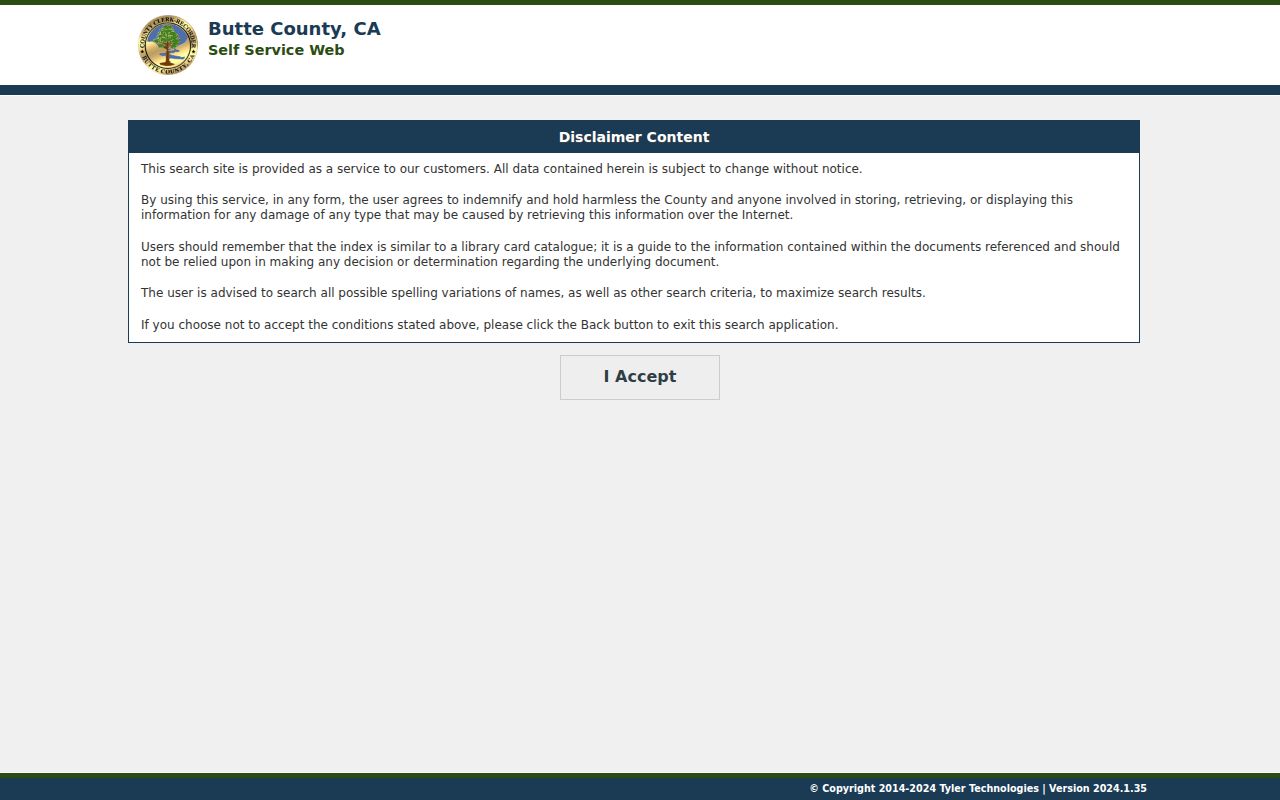
Keep a note of the search terms and document ID beside each Oroville residents directory lead so a clerk can answer a focused question instead of an open-ended identity request.
Butte Court Records for Oroville
The Superior Court of California, County of Butte portal covers nonconfidential civil, criminal, family, probate, small-claims, and traffic cases. It does not offer a single life story. A case number, party role, filing date, case type, status, judicial officer, hearing, register-of-actions entry, charge, disposition, or lawfully linked document is a separate piece of evidence.
Coverage has three legacy seams. Superior Court records are available from 1988, North County Municipal from late 1985, and South County Municipal from 1989. A case filed earlier may appear if it had later activity after an electronic index existed. The portal's 1/1/1900 date is a legacy-conversion placeholder, not a real event date. Juvenile, adoption, sealed, and confidential matters normally stay out of remote results.
| Portal control | Use | Oroville search note |
|---|---|---|
| Smart Search | Party name or case number | Required text field; CAPTCHA may appear. |
| Case type/filter | Narrow a result set | Civil, criminal, family, probate, small claims, traffic, and other listed types. |
| Search Hearings | Open hearing-calendar route | Separate mode from the main party search. |
| Register | Account control | Public search does not require an account. |
The Oroville courthouse is at One Court Street. The portal page should be the first online check, while the court counter and the copy-request process remain important when a document is not lawfully remote.
The manifest's Butte court source capture shows the case-information route:
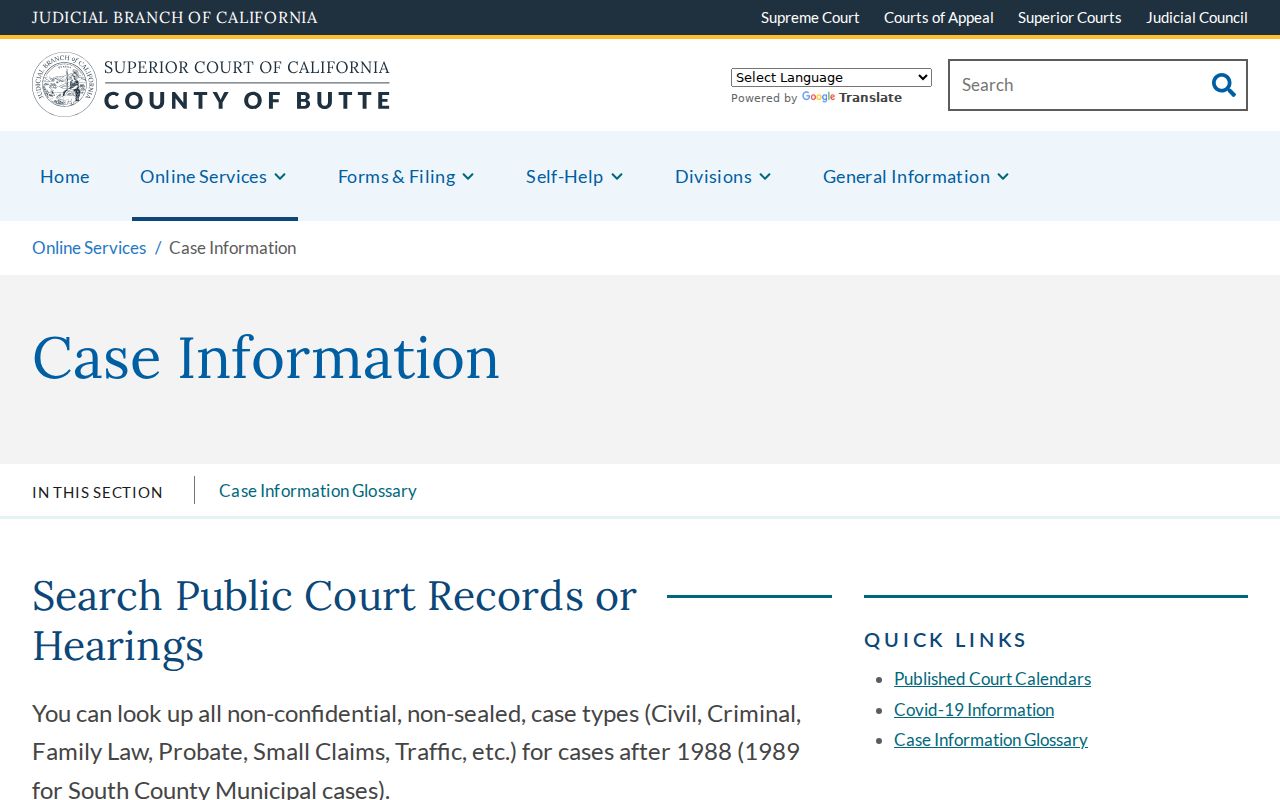
For federal cases involving an Oroville resident, the Eastern District of California record trail moves to PACER, where party and case searches are separate from the county portal.
Oroville Court Access Beyond the Web
Courthouse computers can display some public documents that California rules bar from remote internet display. Rule 2.503 limits remote document access, and Rule 2.507 keeps dates of birth from remote display. That difference explains why a blank document link is not proof that no public paper exists.
When a case number or document title is known, use the Butte Superior Court copy-request form by mail or in person. The research records a $0.50 per-page copy charge, a $15 lengthy-name search, a $40 general certification charge, and processing stated within one week. Ask for a narrow file, give the case number and filing date, and request a cost estimate when the search is broad.
That court trail complements, rather than replaces, the property and historical pieces of an Oroville residents directory. If the goal shifts from a case name to the people on a street, the address-keyed workflow belongs on the Oroville street directory page.
Current Oroville Resident Sources
Current Oroville resident evidence is best read as a set of narrow rolls. Each source lists people or events for its own purpose, and each omits groups that do not fit that purpose. The table below keeps the questions apart.
| Source | Who It Lists | Keeper | Access |
|---|---|---|---|
| Assessor parcel detail | Parcel and tax context | Butte County Assessor | Free APN/address search |
| My Voter Status | One voter's authenticated status | California Secretary of State | Self-service only |
| Recorder index | Parties to recorded instruments | Butte County Clerk-Recorder | Free index; copies cost |
| City-created records | Applicants, officials, speakers, and public business roles | Oroville City Clerk / department | City request channel |
| Library genealogy resources | Historical names, obituaries, and directories | Butte County Library / CSU Chico | Online links plus staff help |
Use the assessor for a parcel question, the recorder for a transaction, the court for a case event, and the voter portal only for the person who authenticates. A business or professional connection needs a California Secretary of State business search or a Department of Consumer Affairs license search. For a one-person evidence chain, use the Oroville resident lookup workflow and record the source and date for every match.
Oroville Voter Status Is a Self-Check
California My Voter Status asks the voter to authenticate with a first name, last name, date of birth, and sometimes the last four digits of a California driver license or identification card. It can show registration status, party preference, polling place, vote-by-mail or provisional status, and related election information to that voter. It is not a public Oroville residents directory that can be browsed by name or street.
A qualified voter-file requester faces a different access rule under Elections Code §2194 and 2 CCR §§19001-19012. The approved purposes include election, scholarly, journalistic, political, governmental, or record-review work. The statewide file fee is $100. A specific-voter request is $30 per record, capped at $100 and limited to ten voters, and requires full name, date of birth, county, and residence address. Driver-license numbers, partial Social Security numbers, unique identifiers, and signature images are excluded.
The My Voter Status source capture shows the authenticated path:
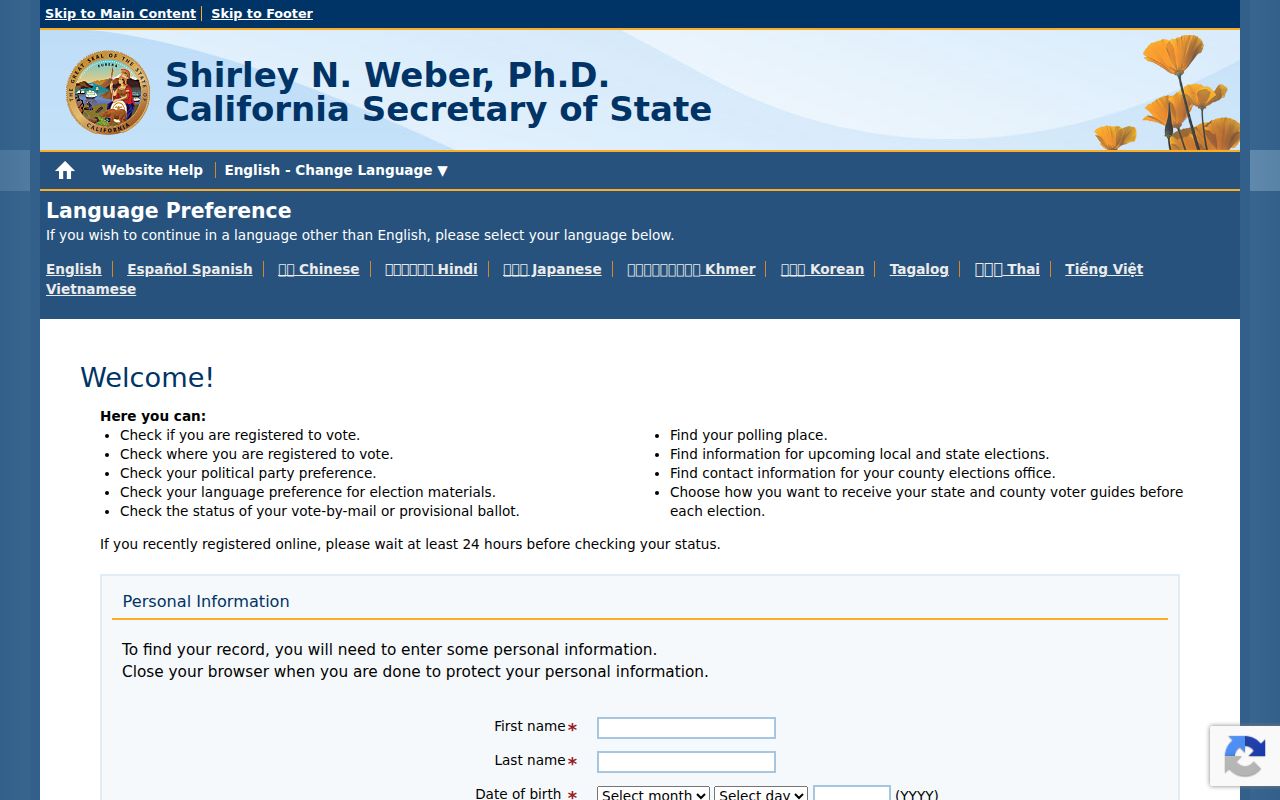
Safe at Home participants and other confidential registrations are withheld. A voter record can support a lawful, approved research purpose, but filtering a dataset by street or ZIP does not turn it into an open block list.
Oroville Vital Records by Age
Birth and death custody changes with the age of the event. Butte County Public Health registers and issues the current year plus one prior year. The Clerk-Recorder handles older county births and deaths, while the California Department of Public Health is the statewide custodian. County marriages start with the Clerk-Recorder, and confidential marriages have a special access rule under Family Code §509.
California does not simply open every certificate after a set number of years. Health and Safety Code §§103525-103526 distinguish authorized certified copies from informational certified copies. An authorized requester proves a qualifying relationship or capacity and signs a sworn statement. Anyone may request an informational copy of most birth or death records, but it is marked not valid to establish identity. Mailed authorized requests need notarization where the form requires it.
- Birth: Public Health handles the current and prior year; the Clerk-Recorder handles older local certificates. The 2026 fee is $31.
- Death: The same local custody split applies, with CDPH supplying statewide copies. The 2026 fee is $26.
- Public marriage: Start with the Butte County Clerk-Recorder or CDPH. The listed 2026 fees are $17 county and $19 CDPH.
- Dissolution certificate: CDPH supplies the $18 event certificate; Superior Court holds the file and judgment.
The county's current certificate-fee instructions and local birth and death custody page should be checked before mailing. The 2026 amounts matter because California fees rose by $2 at the state level.
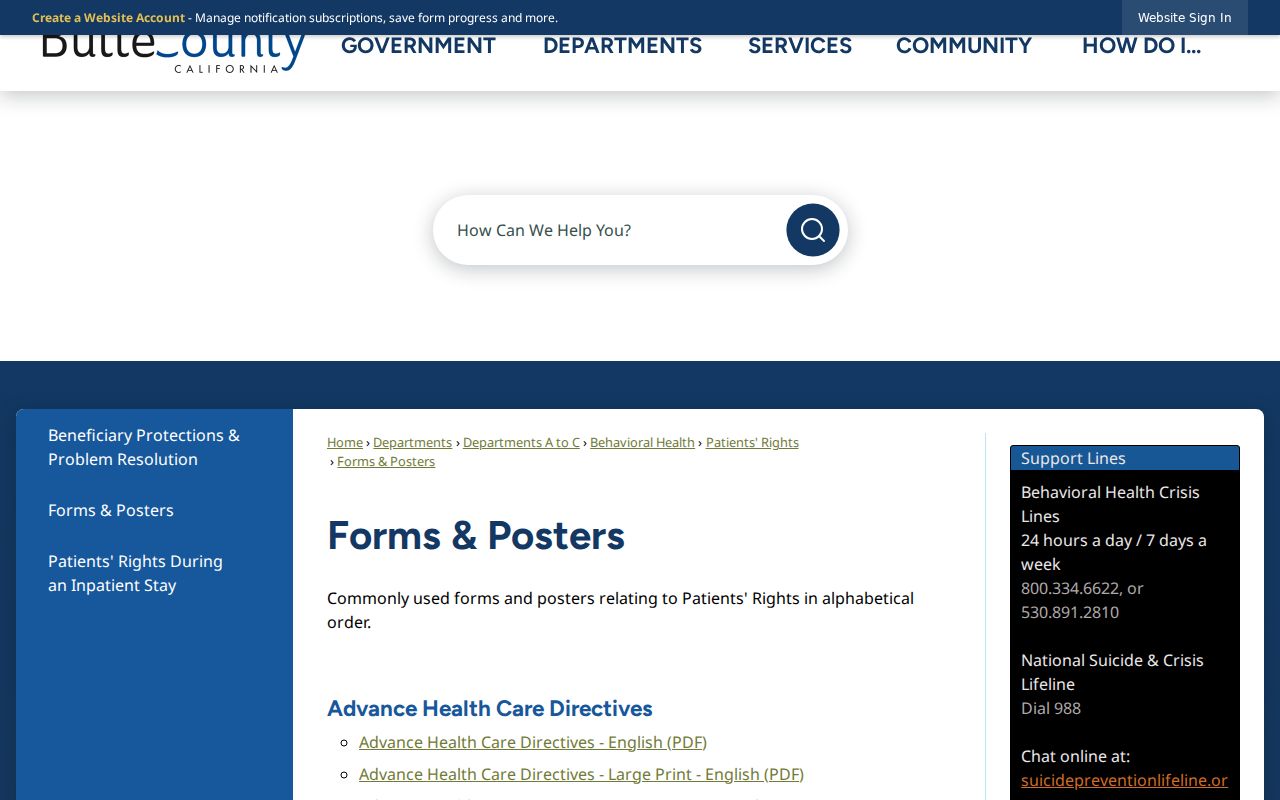
The manifest's Clerk-Recorder source capture reflects the county records counter that connects older certificates with deeds and registrations:
For older family research, the library's pre-1905 death material, California death coverage from 1940-1997, newspapers, obituaries, cemetery evidence, church registers, and census schedules can fill gaps without treating an index as a certificate.
Oroville Heir and Classmate Trails
A person search is often a family-history question rather than a current-address question. Probate petitions and notices can name a decedent, petitioner, heirs, or devisees when the filing is public. An obituary can supply a date, relative, or former town. CSU Chico yearbooks and campus collections can help reconnect former classmates. These sources work best when a full name, approximate date, and place are written down before a search begins.
For an heir trail, start with a probate case number or decedent name, then compare the petition with a deed and an obituary. For a former classmate, use a directory or yearbook to identify a likely year, then test the name in a court, license, business, or vital-record source. A name match alone is weak. Keep the source spelling, middle initial, spouse notation, and address exactly as printed.
Oroville's museums add human context that a parcel roll cannot. The city's museum page points to the Pioneer History Museum, Chinese Temple, C. F. Lott Home, and Bolt's Antique Tool Museum. Their collections may explain a family name, business, building, photograph, or migration path. Arrange research with the published contact rather than assuming every collection is searchable online.
Historical Oroville Resident Directories
Butte County Library links a strong historical shelf rather than a current name roll. The CSU Chico and Butte County Library project digitized local directories beginning with the 1881 L. M. McKinney volume. Surviving scans include 1898, 1904-05, 1907, 1909 and 1910 Chico-Oroville volumes, then selected R. L. Polk years through 1950. The run has meaningful gaps, so a missing year is a collection problem, not proof that an Oroville household disappeared.
Entries can show a surname and given name or initials, spouse in parentheses, occupation, employer or business, home address, and marks such as `h`, `r`, or `wid`. The inspected 1881 page 377 includes miners, merchants, a water-works agent, a jailer, widows, and acreage. A directory proves a dated association with a place or role. It does not prove current residence or identify every member of a household. The full collection and reading method are on the Oroville city directory collections page.
The Butte County Library genealogy source capture shows the research hub for directories, obituaries, newspapers, and death indexes:
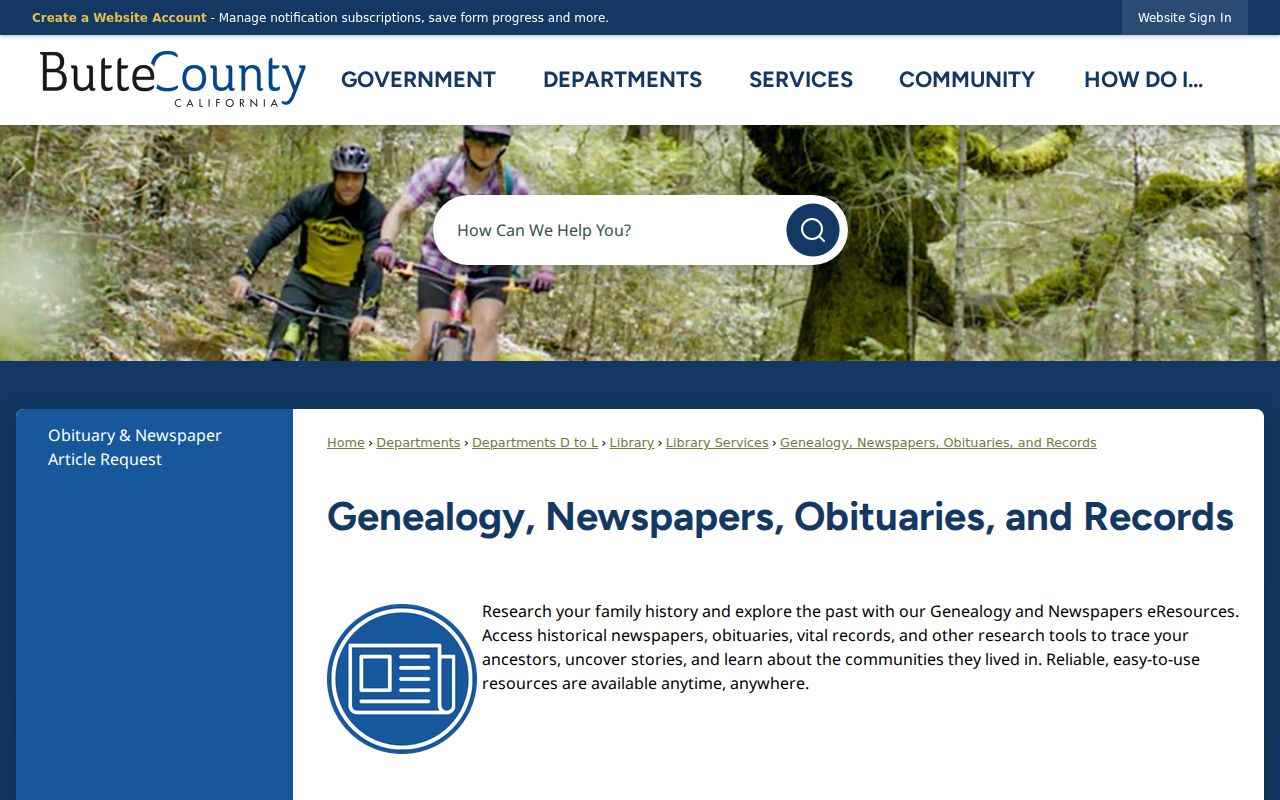
The scan makes an old name searchable, but OCR must be checked against the page image. Pair directory years with census schedules, deeds, permits, Sanborn maps, probate, and obituaries when a family trail matters.
The 1852 Oroville Census Clue
California's 1852 state census is an unusually useful early record for Oroville research. The 1850 federal count was difficult during rapid Gold Rush migration, while the later state census captured Butte County residents in a different moment. The State Archives holds the original, and the State Library provides microfilm and a DAR transcription or index. Search place names as well as modern street names because early records may use mining-camp, river, ranch, township, or bar language.
Oroville's history also shapes name work. The city grew where the Feather River leaves the foothills, served Gold Rush supply routes, and later became a railroad stop. The Chinese Temple records a Chinese community established during the pioneer era, and the official city history includes Ishi's 1911 appearance. Keep historical spellings and transliterations in the research log. Do not replace an original form with a modern normalized name without noting the change.
Oroville ZIP Geography
The Oroville residents directory cannot treat ZIP names as city limits. The main delivery ZIPs are 95965 and 95966, yet both reach county-served and unincorporated places. Thermalito is associated with 95965. Kelly Ridge, South Oroville, and Wyandotte appear with 95966 in county material. Palermo uses 95968. USPS routing, the incorporated boundary, assessor situs, and legal description are four different labels.
Verify a particular address with the USPS lookup, then use the city district map and county GIS to establish jurisdiction. Census QuickFacts reports 20,042 residents in the city in 2020 over 13.83 square miles, with a 2024 estimate of 19,712. Those are city statistics, not a count of every 95965 or 95966 delivery address. The Oroville ZIP code directory keeps that geographic question separate from street-level parcel work.
Oroville CPRA Request Fallback
When a record is not online, California's Public Records Act provides a focused route to the agency that created it. Government Code §§7920.000-7931.000 does not require a requester to explain a motive or use a special form. Describe an identifiable record, department, date range, address, person, or case number. The agency ordinarily makes an initial determination within 10 calendar days and may extend that determination by up to 14 days for unusual circumstances. That decision window is not always a production deadline.
Oroville city records start with the City Clerk's public-record channel when the city created the file. County records can be routed through the Butte County public-record request portal or the named department. Ask for electronic copies, request segregable portions when appropriate, and seek a cost estimate. A narrow description helps the custodian find the right record and keeps a missed online search from becoming a false conclusion.
Oroville Resident Records Need Context
A good Oroville residents directory labels the observation date and purpose of each source. The assessor answers a parcel question. The recorder points to an instrument. The court shows a case event. The voter portal authenticates one person. A vital record confirms an eligible event. A directory captures a printed year. None is a universal household list.
Camp Fire rebuilding makes the distinction especially important across Butte County. A person may keep a parcel while mail goes elsewhere. A rebuilt structure may have a new permit trail on an older APN. A historical address may be renumbered, annexed, or described by a vanished place name. Follow the legal description, APN, document number, and original spelling instead of merging separate records into a story they do not prove.